The Hand That Chooses: On Curation in the Age of AI
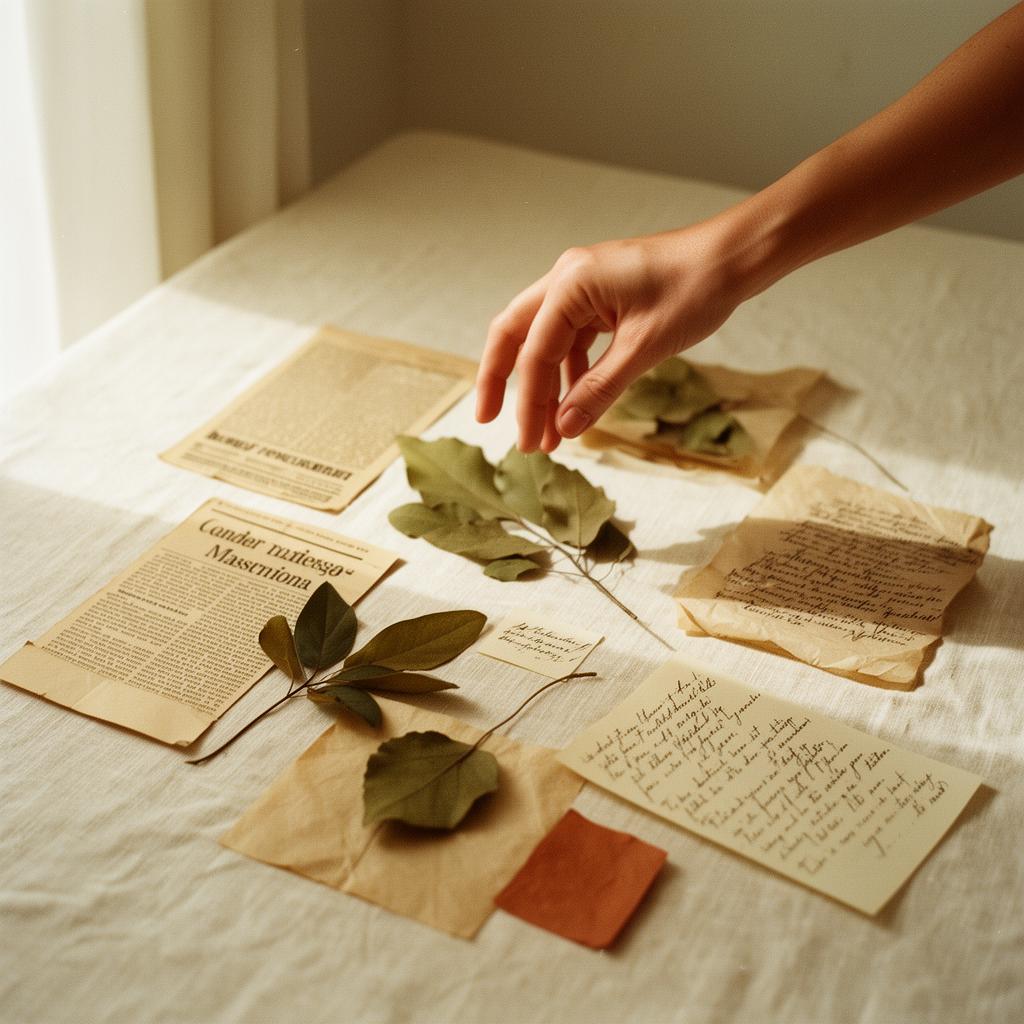
There is a persistent fantasy about creation that has survived every technological upheaval: that making is primarily an act of bringing something new into the world. The artist as originator, the thinker as generator, the creator as a kind of secular demiurge. Yet, if we look closely at how culture has always been made, a quieter, less celebrated activity emerges at its core — not invention, but selection.
In the age of artificial intelligence, this truth is no longer background noise. It is becoming the main event.
Generative systems can now produce images, prose, music and code in volumes that exceed not only human capacity to create, but also to meaningfully consume. Faced with this abundance, the bottleneck of culture shifts. It is no longer the scarcity of content that defines value, but the discernment applied to it. The question is not “Can this be made?” but “What, among all that can be made, is worth keeping?”
This is the domain of curation.
Historically, curation has been misunderstood as a secondary or administrative act — the arrangement of works after the fact. Museum curators, editors, DJs, teachers: all operate downstream from creation, shaping how artefacts are encountered. But this framing understates the generative power of selection itself. To choose is to create a pathway through possibility. It is to impose form on excess.
What AI does is not simply automate creation; it radically expands the field from which selections must be made. When a model can produce a thousand variations in seconds, authorship migrates from the act of making to the act of choosing among outputs — and, crucially, choosing what to ask for in the first place.
Prompting, often framed as a technical skill, is better understood as a curatorial gesture. A prompt does not merely instruct; it defines a space of potential outcomes. The specificity, taste and intention embedded in that instruction shape everything that follows. In this sense, the prompt is less like a command and more like a question posed to an archive of latent forms.
But the real labour begins after generation.
Consider the difference between scrolling through an endless feed of AI-generated images and encountering a tightly composed selection that seems to speak with a unified voice. The former induces fatigue; the latter, meaning. The distinction lies not in the intrinsic quality of the individual images — many may be equally compelling — but in the relationships established between them. Curation is relational. It draws connections, establishes contrasts, creates rhythms.
In an environment saturated with plausible outputs, coherence becomes rare. And rarity, as ever, is a proxy for value.
It is here that contemporary tools designed not to create but to save become unexpectedly central to creative practice. Platforms like Pocket, along with the emerging ecosystem of intentional archiving tools such as Save Discover Later, function as personal staging grounds for thought. They allow fragments — articles, images, ideas — to be gathered without immediate pressure to evaluate them. What begins as passive accumulation can, over time, become an active archive: a space where patterns emerge, affinities sharpen, and a curatorial sensibility takes form.
These tools do not replace judgment; they defer it. And in doing so, they create the temporal distance necessary for better selection.
There is also an ethical dimension to curation that becomes sharper under AI conditions. Generative models are trained on vast corpora of human-made material, absorbing styles, conventions and biases. To curate AI outputs, then, is not merely to select aesthetically pleasing artefacts, but to navigate an inherited landscape of influences and omissions. What is surfaced, amplified or suppressed is no longer incidental. It becomes a form of responsibility.
The curator, in this sense, is not neutral. They are a filter through which culture is refracted.
This refractive role is especially significant given the tendency of AI systems to converge on the statistically likely. Left unchecked, generative outputs drift toward a mean — a smooth, competent, and often forgettable aesthetic. Curation interrupts this drift. It can privilege the anomalous over the average, the surprising over the predictable. It can insist on friction where the system prefers ease.
In doing so, it reintroduces a human dimension that is not reducible to data: taste.
Taste is notoriously difficult to define, but it is easy to recognise in its absence. It manifests as a sensitivity to nuance, a capacity to detect what matters within a field of near-equivalents. In pre-AI contexts, taste operated within constraints: limited materials, time, and tools. Now, its function changes. It must operate at scale, sifting through abundance without collapsing into arbitrariness.
This raises a paradox. If AI can learn from human preferences, can it not also learn to curate?
To some extent, it already does. Recommendation systems and ranking algorithms are forms of automated curation, shaping what we see and, by extension, what we come to value. But these systems optimise for engagement, not meaning. They are driven by patterns of attention rather than judgments of significance. The result is a feedback loop in which what is most visible becomes what is most visible.
Human curation, at its best, breaks this loop.
It introduces discontinuity. It can elevate what is not yet popular, recover what has been overlooked, or assemble works in ways that generate new interpretations. It is not bound to past behaviour; it can act on conviction, intuition, even risk. In this sense, curation is a wager on the future — a bet that certain selections will matter, even if their value is not immediately legible.
In creative practice, this wager becomes central. The artist working with AI is less a solitary maker and more an orchestrator of possibilities. Their medium is not just the output, but the process of navigating outputs. Iteration becomes exploration; rejection becomes as important as acceptance.
To discard is to define.
What emerges from this process is not simply a finished artefact, but a trace of decisions. The final work carries within it the invisible structure of choices that led to it — choices about what to include, what to exclude, and how to arrange what remains. These decisions are what give the work its character. Without them, it would dissolve into the undifferentiated mass of everything that could have been.
This is why curation is not ancillary to creation in the age of AI; it is constitutive of it.
There is, perhaps, a deeper shift underway. If modernity elevated originality as the highest creative virtue, the AI era may elevate discernment. The figure of the genius inventor gives way to that of the careful selector, the attentive arranger, the one who can see value where others see noise.
This does not diminish creativity. It reframes it.
To curate well is to understand context — historical, aesthetic, cultural. It requires knowledge, but also sensitivity to emergence: the ability to sense when something new is taking shape within the familiar. It is both analytical and intuitive, structured and open-ended. And it is irreducibly human, not because machines cannot perform selection, but because the stakes of selection are ultimately human.
We are the ones who must live with what is chosen.
In a world where almost anything can be generated, the meaningful act is no longer to add to the pile, but to shape it. To carve out spaces of coherence, resonance and surprise. To make not just things, but sense.
The art of curation, then, is not a retreat from creation. It is its evolution.
And in the age of AI, it may be the most vital creative act we have.
Practical notes: curating effectively with Save Discover Later
Capture first, judge later Save widely without overthinking. Let instinct guide what feels interesting in the moment.
Tag with intent, not just topic Use tags that reflect why something matters (eg. “tone”, “structure”, “provokes”, “use later”) rather than only what it is about.
Revisit in cycles Schedule time to return to saved material. Curation happens in the revisiting, not the saving.
Cull aggressively Delete or archive items that no longer resonate. A smaller, sharper collection is more useful than a large, vague one.
Group by emerging themes Look for patterns across saved items and cluster them into collections that suggest ideas or projects.
Write marginal notes Add brief reflections to saved items. A single sentence of context can transform a bookmark into a building block.
Promote the exceptional Identify a small subset of truly valuable items and elevate them into a “core” collection.
Connect across domains Deliberately link ideas from different fields. Novelty often emerges at the intersection.
Let time do part of the work Distance clarifies taste. What remains compelling after weeks or months is often what matters.
Curate for future self, not past self Save and organise with an imagined future use in mind — writing, designing, thinking — rather than mere accumulation.